





World Vision is an international Christian humanitarian organization dedicated to working with children, families, and their communities to overcome poverty and injustice.
The Challenge
World Vision came to us with an ambitious goal: to increase recurring private income to $650 million by 2030 for children living in fragile contexts.
As one of the world’s largest Christian humanitarian organisations, with 46,000 staff and volunteers working across the globe, World Vision has extraordinary reach, infrastructure and credibility. But despite that scale, the organisation was still looking at a new version of child sponsorship as the answer, when the real opportunity was to imagine a more modern, more flexible and more culturally relevant model for giving.
The Spark
Digitisation has changed almost every category in the last decade, and charity is no exception. People now expect giving to feel as simple, transparent and intuitive as every other service in their lives.
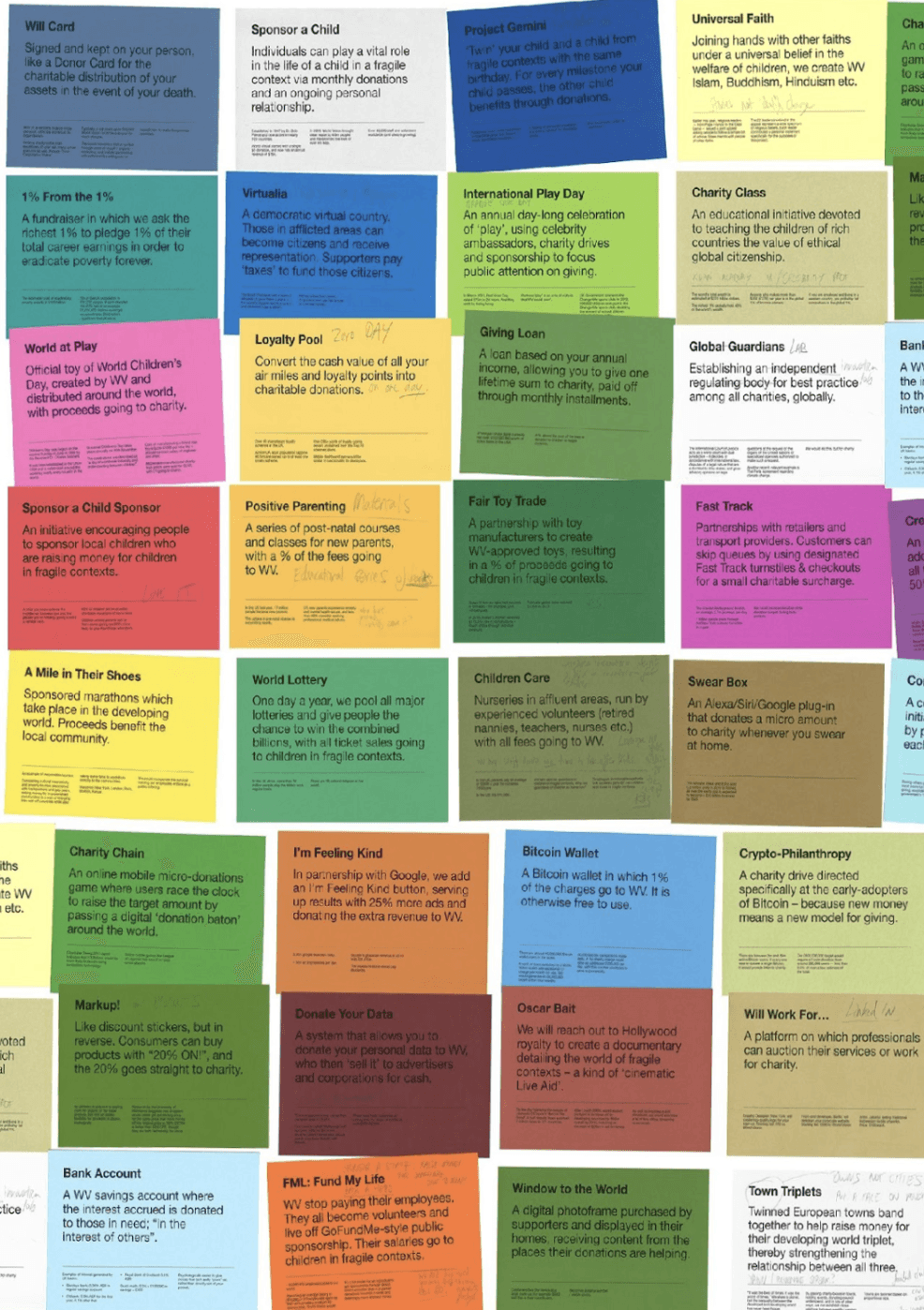
They want more control, more visibility and more relevance, without more friction. The question became clear: how could we make giving feel less like a one-off act of generosity and more like a natural part of everyday life? To explore that, we developed 50 concepts and workshopped them with the World Vision team, looking beyond traditional sponsorship models towards ideas that could turn giving into a repeatable behaviour.
The Breakthrough
The breakthrough came from one simple, surprising truth: if you earn more than $32,400 a year, you are technically part of the global 1%. That insight reframed the opportunity completely.
Instead of asking people to make a vague donation to a distant problem, we could invite a powerful audience to recognise the role they already play in the world. A small number of people could make an extraordinary impact if giving became a small, consistent part of how they earn, spend, save and move money.
From that came the organising idea: What if the 1% gave 1%? One percent of their salaries, one percent of their transactions, one percent of their transfers or one percent of their investments. A small action, repeated at scale, could become a new kind of humanitarian engine.
The Impact
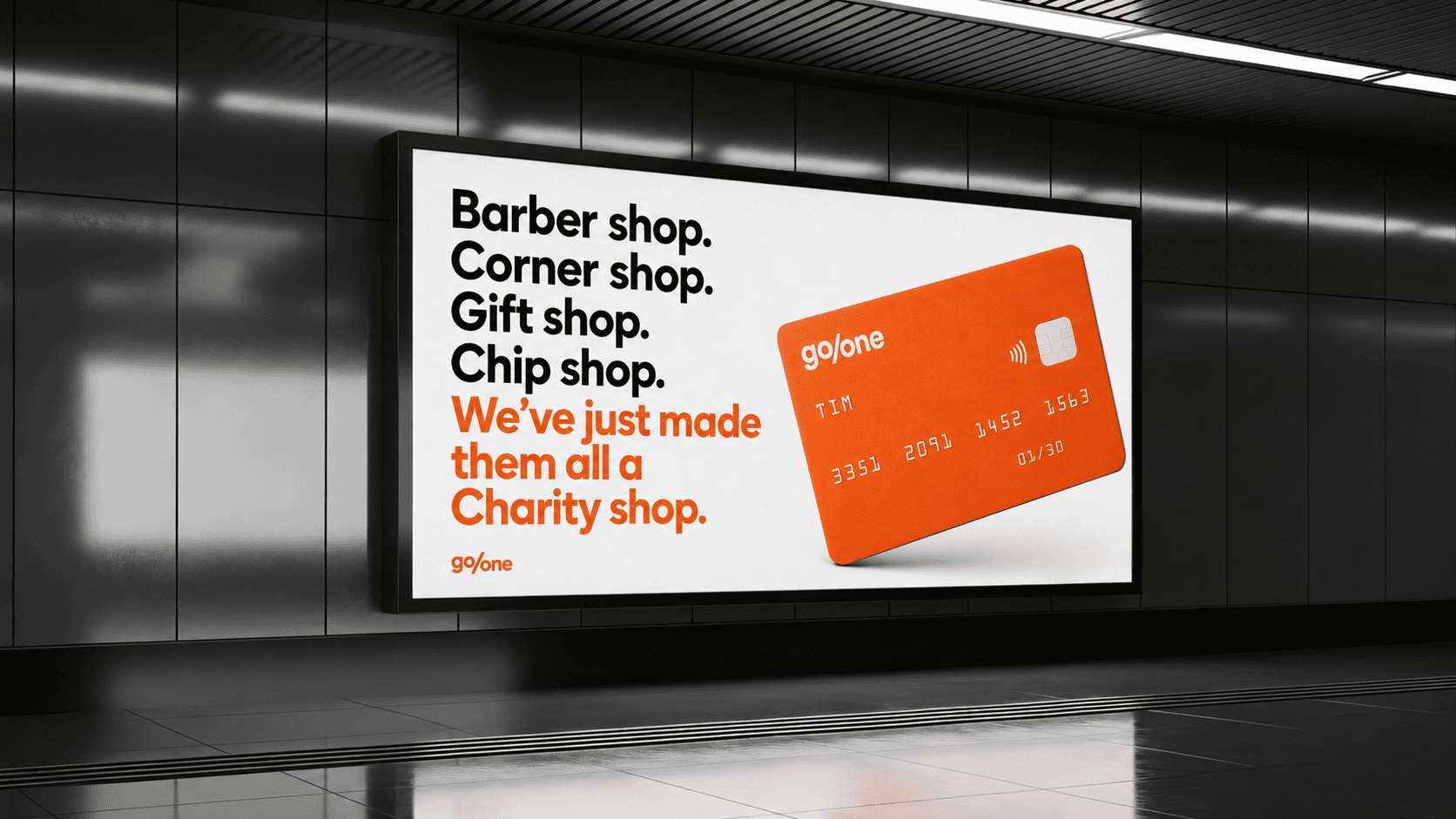
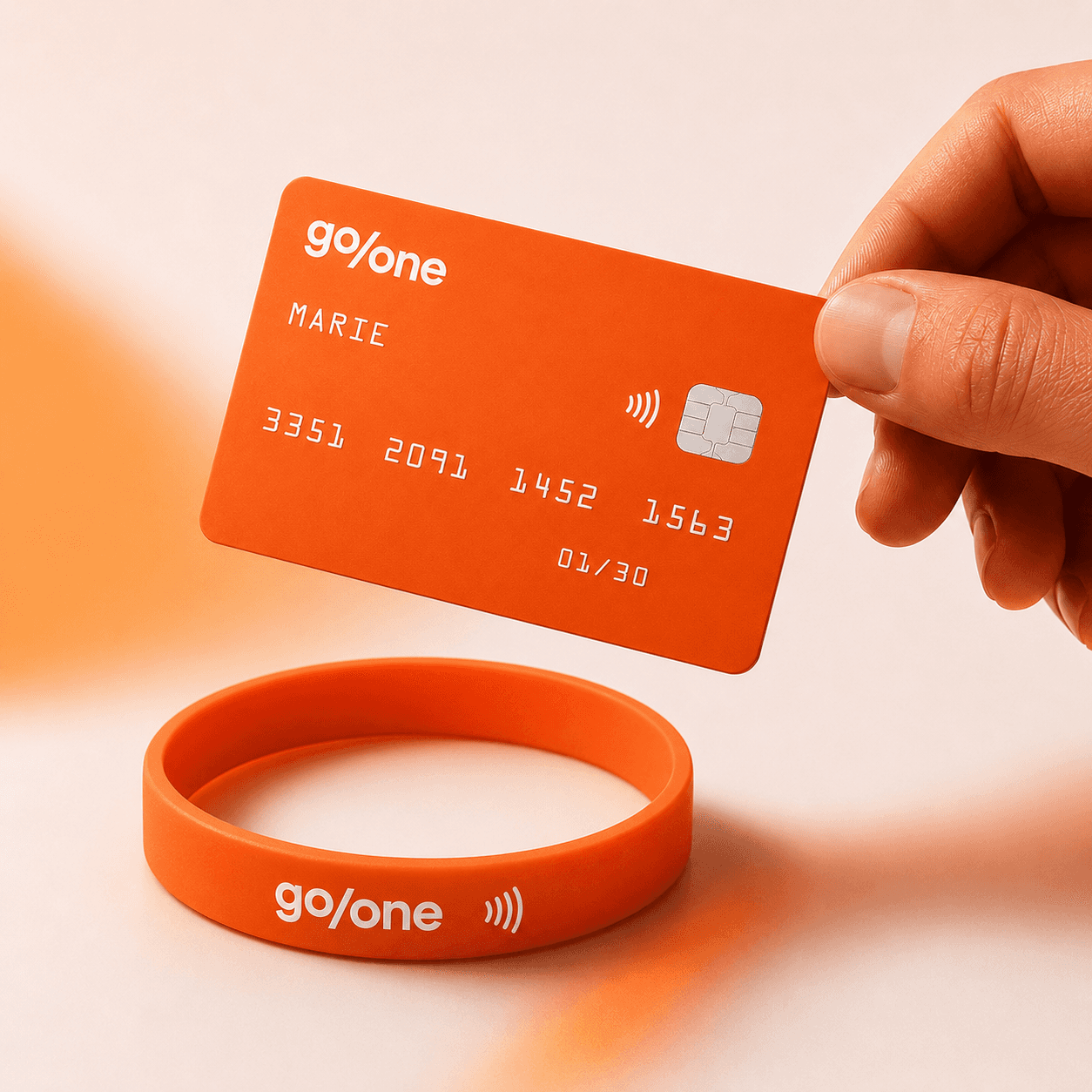
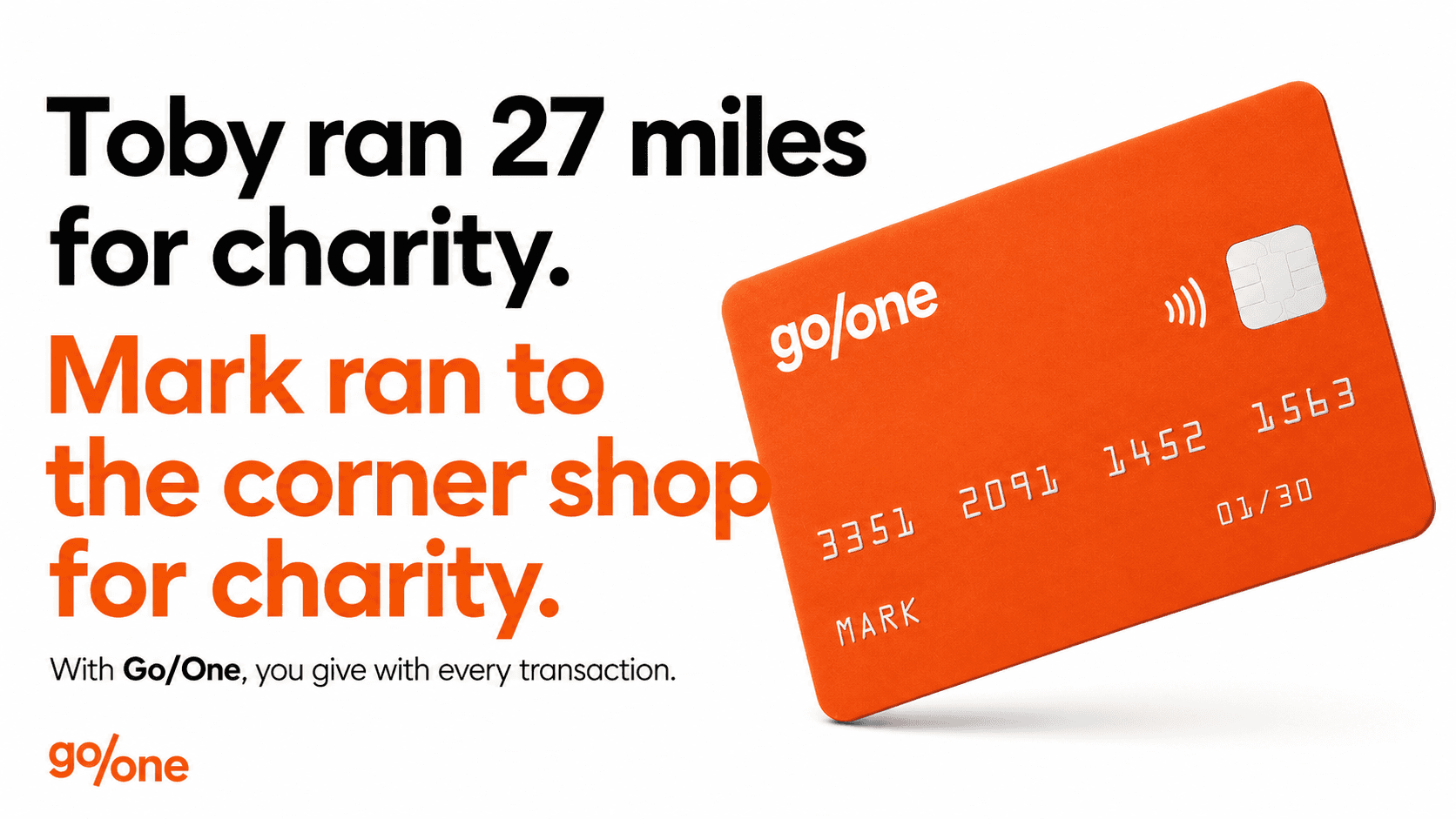
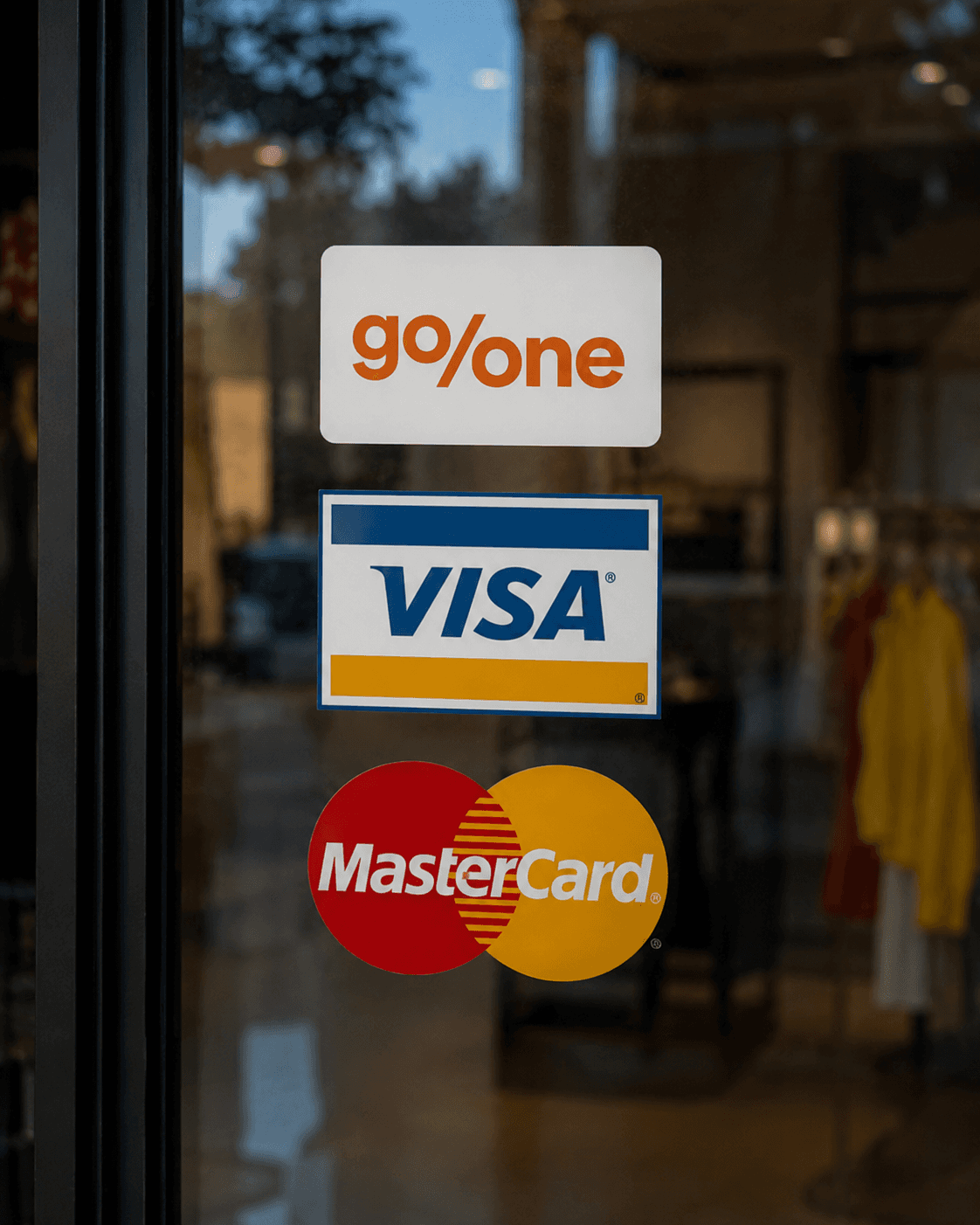
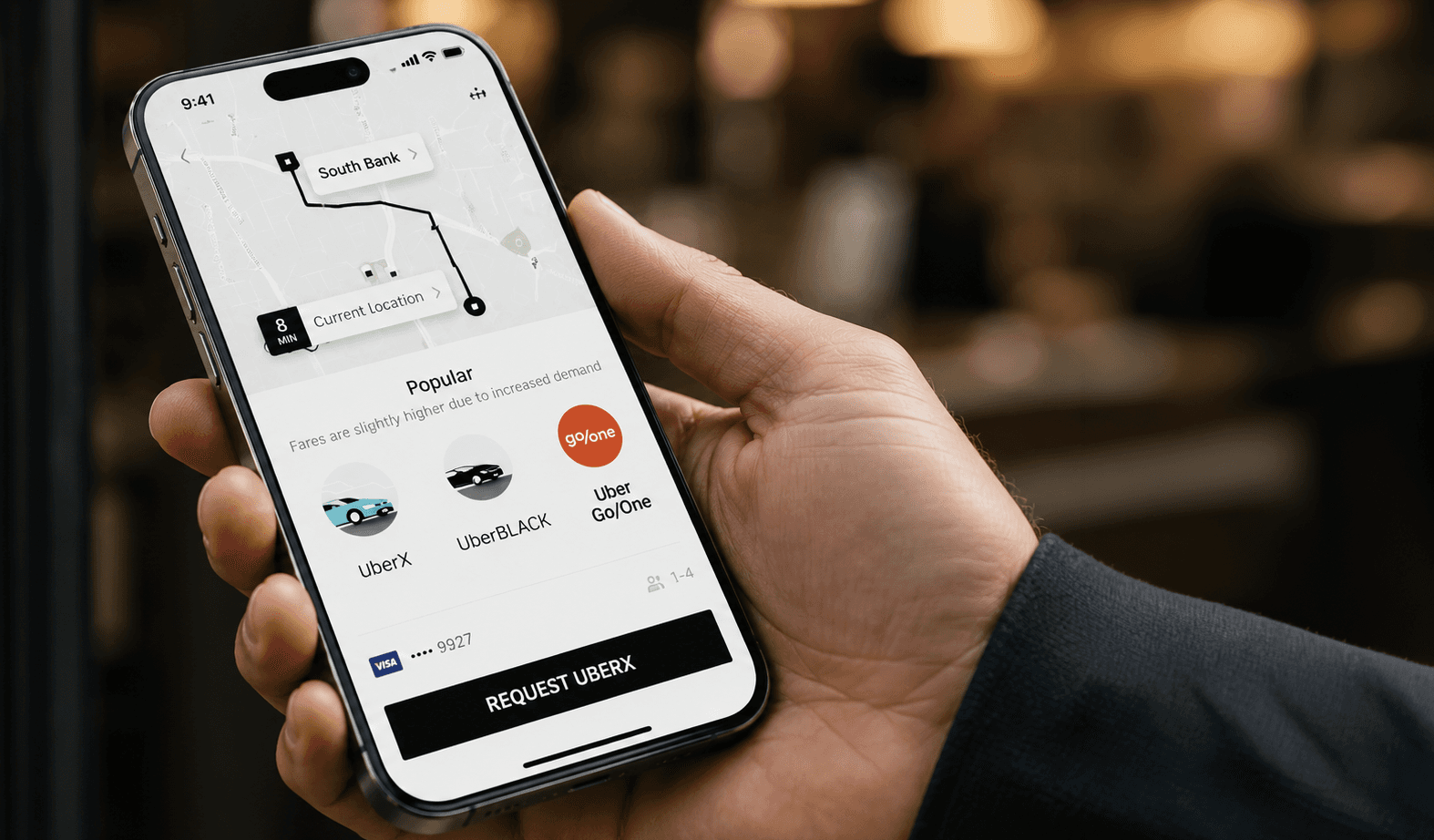
GO/ONE became the frictionless giving mechanic designed to turn this idea into action. It was not simply a campaign or a fundraising product, but a new platform for living generously. The initiative created multiple ways to GO/ONE, each tailored to different audiences, behaviours and financial moments.
For some, it could be salary-based giving. For others, it could be rounded-up transactions, investment-linked contributions or automated transfers. The result was a model that made giving feel personal, modern and effortless, while helping World Vision move beyond sponsorship into a broader, more scalable future for recurring income.